
Blind counts, and why the method changes the answer
Give a counter the expected figure and you have told them what to find. The method is not a detail.
Two teams can count the same store on the same day and produce different results, without either of them being careless. The difference is method, and the most consequential choice in it is whether the counter can see the system quantity.
The three methods, and which one SHS uses
Sheet-to-floor
The counter works from a printed list of what the system says should be there, finds each item and confirms the quantity. It is the fastest method and the most widely used, and it has two structural weaknesses.
The first is anchoring. The sheet says 48. The counter counts 48 and moves on. Whether there were actually 48 is a question the sheet has already answered for them. This is not dishonesty; it is how attention works, and it affects careful people as much as careless ones.
The second is that sheet-to-floor can only find items the system knows about. Anything physically present but absent from the list — stock under a retired code, items never entered, goods received against the wrong code — is invisible to the exercise, because nothing sends the counter to look at it.
Floor-to-sheet
The reverse: the counter works through the physical space, records everything found, and the comparison to the system happens afterwards. Slower, and it finds the things sheet-to-floor cannot — unlisted stock, wrong-location stock, items under codes nobody is using any more.
It still shows the counter the system quantities somewhere in the process, so some anchoring remains, but the physical space rather than the list drives the work.
Blind counting
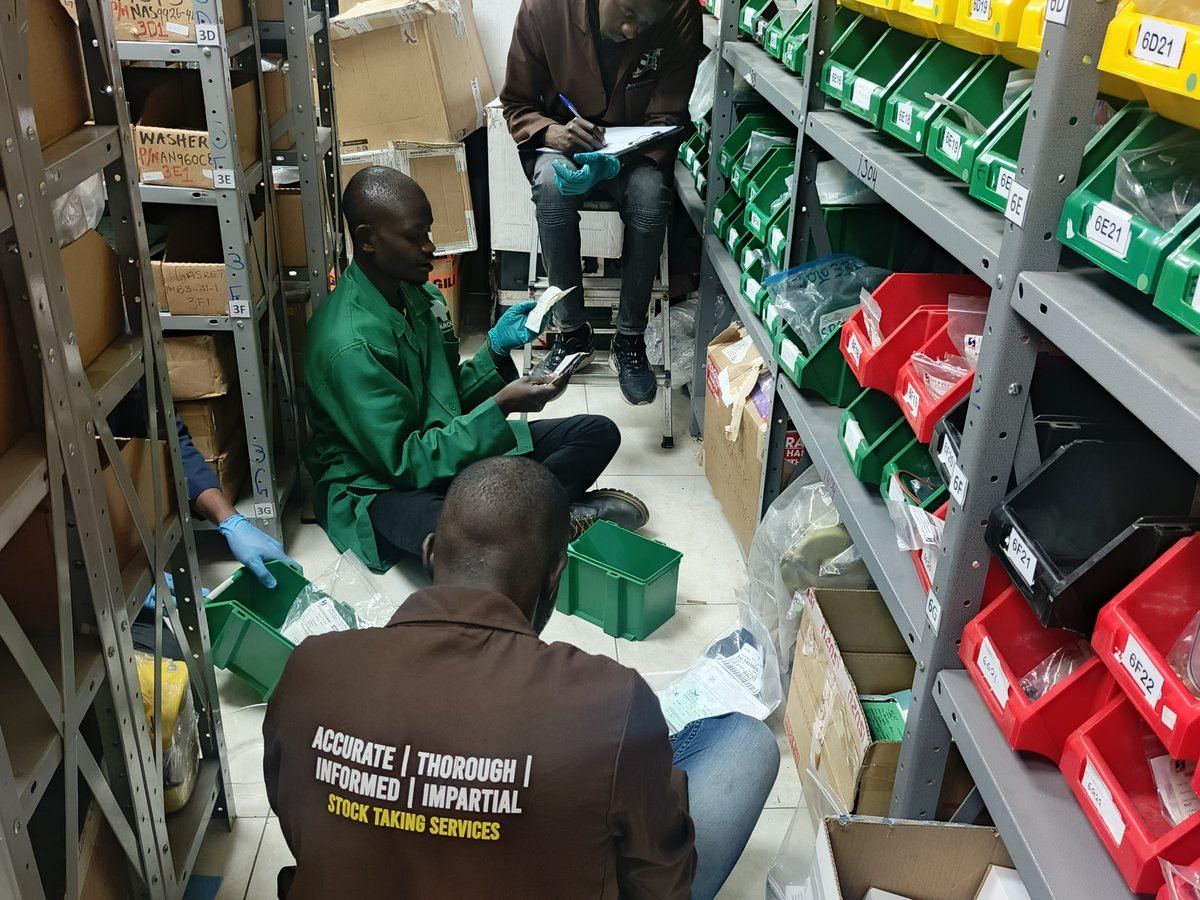
The counter records what is physically present with no sight of the system quantity at any point. The comparison is made afterwards by somebody else. Where a variance appears beyond a defined tolerance, the item is recounted — still blind.
It is the slowest of the three and the only one that produces a number genuinely independent of the record. Everything else measures agreement with the system to some degree; a blind count measures the stock.
Why the difference is not marginal
The purpose of a count determines how much the method matters. If you are checking that the store is roughly in order, sheet-to-floor is proportionate. If the figure is going into audited accounts, supporting a business sale, establishing opening balances for a new system, or settling a question about loss, then a number anchored to the record you are supposed to be testing is not evidence.
The clearest way to see it: a sheet-to-floor count asks “is the system right?” and allows the answer to be influenced by the system. A blind count asks “what is there?” and finds out. The first question cannot be answered reliably by a method that has already seen the answer.
Tolerance and recounts
Blind counting only works if recount rules are set in advance. Decide before the day what variance triggers a recount — a percentage, a value, or both — and who performs it. Without that, the first count becomes final by default and the method loses most of its value. Recounts should also be blind, and ideally by a different counter.
The practical objection
The usual objection to blind counting is time, and it is a fair one. A blind count takes longer, and a blind count with disciplined recounts takes longer still.
Two things make it manageable. The first is that blind counting does not have to apply uniformly: apply it to the lines that carry the value and the risk, and use a faster method on the long tail of low-value items. Most of the assurance comes from a minority of the stock.
The second is that the time saved by sheet-to-floor is frequently spent afterwards, investigating variances that turn out to be miscounts, or recounting an entire section because the first pass is not believed. A count that has to be repeated was not faster.
Choosing the method
- Audit, year-end, or any figure going into financial statements — blind on material lines, at minimum
- Opening balances for a new system — blind, and a full count rather than a sample
- Business sale or transfer of ownership — blind, and independently supervised, since both parties need to accept the result
- Investigating a suspected loss — blind, unannounced, and the custodian should not be involved in it
- Routine cycle counting — blind is still preferable and is quite practical on a small daily sample
- A quick operational check on low-value lines — sheet-to-floor is reasonable, provided nobody treats the result as assurance
The underlying rule is simple enough. The more the number matters, and the more independent it needs to be, the less the counter should know before they count.
What we do as standard
- Blind counts on material lines, with the system quantity withheld from the count team
- Recount thresholds agreed with you before the count, by value and by percentage
- Recounts performed blind, and by a different counter where the assignment allows
- Original count data retained exactly as captured, before any adjustment
- Count teams independent of your storekeepers, with no interest in the result
Want a number that was not anchored to your system?
That is the whole of what we do. Tell us what you hold and where, and we will set out how we would count it.
Request a Site AssessmentKeep reading
More from our insights
 Counting methodHow often should you count your stock?Once a year is the legal minimum in most businesses. It is rarely the right answer operationally.20 Nov 2026 · 6 min read
 VarianceYour stock variance is probably not theftWhen the count does not match the system, most managers reach for the same explanation. The data usually says otherwise.20 Nov 2026 · 7 min read
 AuditWhat auditors actually want from your year-end countThe count itself is half of it. What auditors test is whether the number can be evidenced.20 Nov 2026 · 6 min read