

Opening balances decide whether your new system works
A new inventory system inherits whatever you load into it. Most failed implementations were lost at this step.
A business spends months selecting an inventory system, negotiates the licence, pays for implementation and training, goes live — and six months later nobody trusts the stock figures. The software is usually blamed. The software is usually not the problem.
A new system does not clean anything. It inherits exactly what you load into it, and then applies its rules to that inheritance with great consistency. Load unverified balances against a messy item list and you have built a faster, more expensive version of the problem you were trying to leave behind.
What gets loaded, and what goes wrong
Two things move into the new system at go-live: the item master data, and the opening quantities. Both are commonly taken straight from the old system on the assumption that they are correct, and both are commonly wrong.
The item master
Most item lists that have been in use for several years contain the same set of problems:
- Duplicates. The same physical item under two or three codes, created at different times by different people. Each carries part of the stock and part of the history.
- Dead codes. Items discontinued years ago, still active, still carrying a balance that no longer physically exists.
- Inconsistent units of measure. Purchased in one unit, stored in another, sold in a third, with no conversion defined, or a conversion that was never right.
- Descriptions that do not identify anything. “Bolt 10mm” where there are eleven different 10mm bolts. Nobody can match that to a physical item with confidence, which means nobody can count it with confidence either.
- Missing structure. No category, no location, no supplier reference — so the new system’s reporting, reorder logic and valuation have nothing to work with.
Every one of these problems is survivable in an old system people have learned to work around. In a new system, where reorder points, costing and reporting are driven automatically from that data, the same problems produce wrong orders and wrong numbers.
The opening quantities
The more serious issue. The balance in the old system is, in most businesses, a figure that has not been physically verified since the last annual count. Loading it into the new system makes it the official starting point — and from that moment every subsequent transaction is layered on top of an error nobody has measured.
Worse, once the system is live the error becomes very hard to isolate. Was the shortfall there at go-live, or did it occur afterwards? Nobody can say, because there is no verified baseline. The usual outcome is that the first count after go-live produces large variances, confidence in the new system collapses, and people revert to their spreadsheets.
The sequence that works
Clean the item master, then physically verify the stock against the cleaned list, then load the verified quantities as opening balances, then go live. Doing it in that order costs a few weeks. Doing it in any other order usually costs the first year of the system’s useful life.
Cleaning the item master
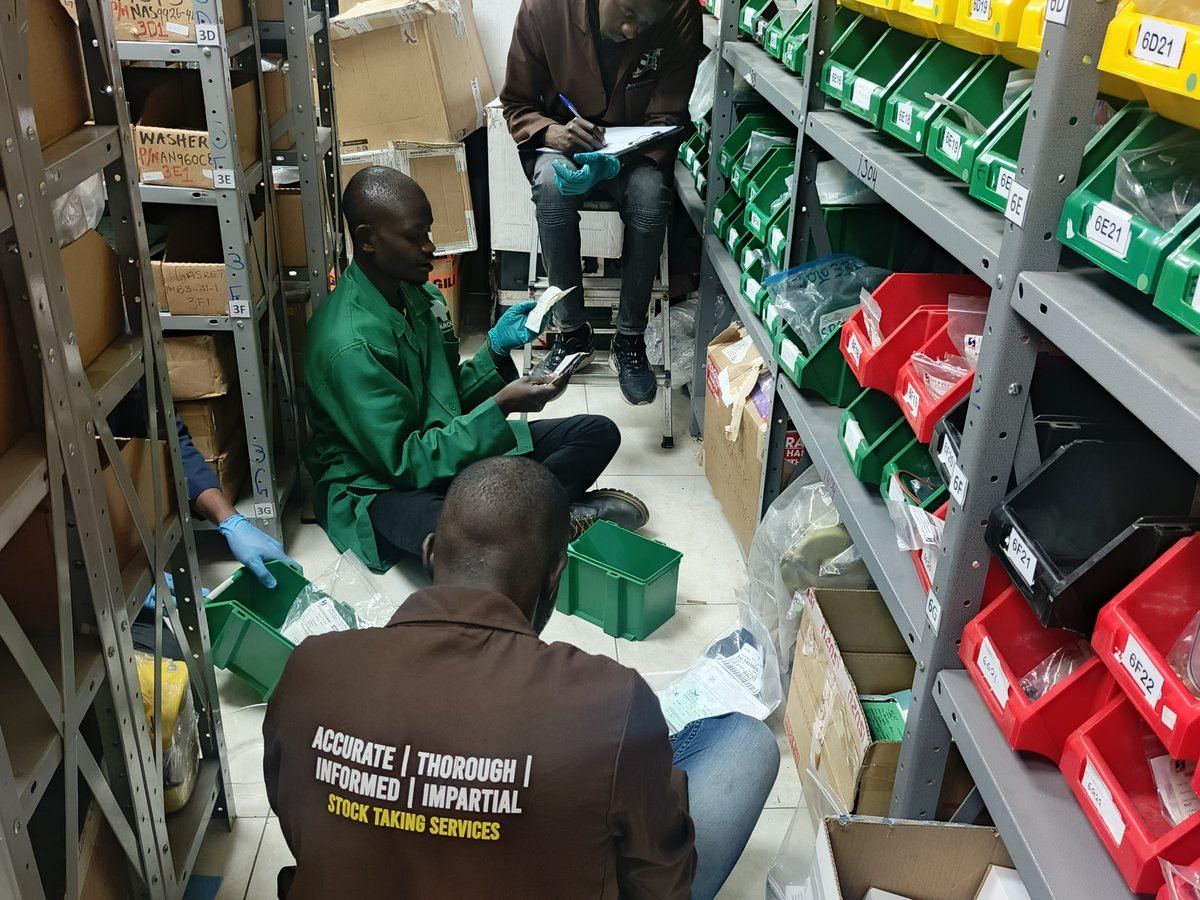
This is detailed work, and it is better done with the physical stock in front of you than from a spreadsheet alone. The core passes are:
- Identify duplicates and near-duplicates by description, by supplier code and by barcode, then confirm physically that they are the same item before merging
- Establish one unit of measure per item, with the conversions defined explicitly where purchasing, storage and sales units differ
- Rewrite descriptions so that each one identifies exactly one physical item — a person holding the item should be able to find its code, and vice versa
- Retire genuinely dead codes rather than carrying them across
- Apply a consistent structure for category, location and supplier so the new system’s logic has something to work from
Do this before the count, not after. Counting against the old list and mapping afterwards introduces a second translation step, and the mapping errors are then indistinguishable from count errors.
Verifying the opening balances
The opening count should be treated with more care than a routine annual count, because its errors do not wash out — they persist as the system’s baseline.
That argues for a full count rather than a sample, for blind counting, and for independence: the people who maintained the old balances should not be the sole verifiers of the new ones. It also argues for counting as close to go-live as operations allow, since every day between the count and the cut-over is a day of movement to reconcile.
What to hand the implementers
Implementation teams SHS works alongside are generally good at configuring software and are not in a position to tell you whether your stock data is true. What they need is a clean, structured file they can load without interpretation.
A data pack ready for upload contains
- A de-duplicated item list with one code per physical item
- One defined unit of measure per item, with conversions where purchase, storage and sales units differ
- Descriptions that identify a single item unambiguously
- Physically verified opening quantities by item and by location, as at a stated cut-off
- Category, location and supplier structure applied consistently
- A documented record of what was merged, retired or changed, and why
If you have already gone live
The position is recoverable, and the remedy is the same work done later. Verify the physical stock against the live system, classify what the variances are telling you, clean the master data in place, and correct the balances in one documented adjustment with a stated effective date.
The important part is the documented baseline. Once you have one verified date, the system has something to be measured against, and the next count tells you about the period rather than about the whole unknown history before it.
Moving to a new inventory system?
We verify opening balances and prepare clean, structured data for upload, working alongside your implementation team. The earlier we are involved, the less there is to unpick.
Request a Site AssessmentKeep reading
More from our insights
 Counting methodBlind counts, and why the method changes the answerGive a counter the expected figure and you have told them what to find. The method is not a detail.20 Nov 2026 · 5 min read
 Counting methodHow often should you count your stock?Once a year is the legal minimum in most businesses. It is rarely the right answer operationally.20 Nov 2026 · 6 min read
 VarianceYour stock variance is probably not theftWhen the count does not match the system, most managers reach for the same explanation. The data usually says otherwise.20 Nov 2026 · 7 min read